
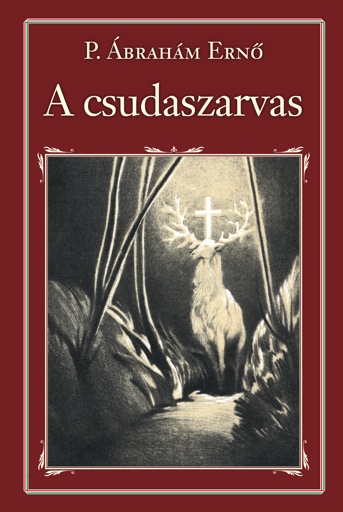
Ernő P. Ábrahám: The miraculous deer
Where was he, where was he not...
The reader is holding a magical storybook. The orphaned prince, named Tüzes, follows the moon shining on his antlers and the reindeer holding sparkling stars on his fiery horse, into the Hungarian past, into the world of fairy tales. The king's whip of God stands next to the throne of the Hun prince Attila, he follows the reindeer to Lebédia, Etelköz, the ancestral home of the Hungarians, and delights in the swearing of the blood pact of the Hungarian tribes. In the Carpathian Basin, he happily experiences the intoxication of the Hungarian conquest. He sees the plundering raids of the warriors raining down a barrage of arrows on Europe, rejoices in the victories, mourns the defeats, and anxiously watches the Hungarians who lost from the battlefield of Augsburg in 955 after Christ, throwing away their weapons and fleeing, pleading for help to their god, Hadúr.
Again and again, determinedly, curiously, hungry for knowledge, he follows the reindeer that now has a brightly shining cross on its antlers. A prayerful observer of Vajk's baptism, an agreeing supporter of King István's wise and strict rule, his eyes fill with tears at the canonization of our dead ruler. Following the reindeer, he wanders in the thick of the history of our Árpád kings, in the labyrinth of sometimes shining, sometimes darkening centuries.
The reader holds a wise history book. Writer and translator Ernő P. Ábrahám writes the history of Hungarians from the collapse of Attila the Hun's empire to the last Hungarian king of Árpád III, in 1925 in the mutilated and mentally damaged Hungary, avoiding dry data sets and clever historical explanations, but insisting on historical facts. András until his death in 1301.
The writer and his hero, Prince Árva, know that "all this is in the past", it happened, it is over, it is impossible to rewrite it, to make it undone. But he proclaims with faith: knowing what we have experienced, what we have done and what has been done to us is mandatory for all Hungarians for the sake of our authentic self-knowledge - to take pride in our virtues and heroic deeds, and humbly repent of our mistakes and sins.
Wandering in our past, Prince Árva's most bitter experience: for centuries, fraternal strife destroyed the strength, creativity, and talent of Hungarians. In the first centuries of the founding of our state, Christian Hungarians and pagan Hungarians faced each other, and Hungarians often killed Hungarians in bloody fratricidal wars. Then brother fought brother, son fought father, father fought son for the throne, for royal power, for possession of the royal wealth. If a king with a strong hand and maintaining order sat on the throne, blood relatives who envied and desired the throne, power, and royal wealth attacked the strong central power. During their warfare, the country shriveled, impoverished, and was destroyed. If the king was weak-handed, then power-hungry petty kings who did not respect the law or human life destroyed Hungary's economy, resources, and life. They destroyed their country - our country.
Time-traveling through the historical maze of the Árpád kings, Prince Arva did not know István Széchenyi's wise admonition - "Without unity, Hunnia is nothing." - but you see, you understand: Hungary can only be saved from destruction if Hungarians and Hungarians do not attack each other for power, for the throne, for obtainable concerts, but with common strength and fraternal cooperation, everyone works for the rise of Hungary. Before them, before us, is the example to be followed: during the reign of St. Stephen, St. László and King Kálmán, our country was a strong and rich country, and protected by powerful armies, the people and the nation were free and happy within our national borders.
The orphaned prince who follows the reindeer sees - a historical lesson - sadly: we Hungarians have harmed each other and our country more with our quarrels with each other than the conquering enemy who invades the country from time to time.
Because without unity, Hunnia became defenseless, weakened, and sometimes drifted to the brink of destruction...
The reader holds an instructive royal mirror. The historical past, which the Orphan Prince walks through in his dream, the experience of the historical past teaches the 20th century fairy tale prince who is about to rebuild and resurrect the country from its ruins to rule.
At the time of the conquest of the country, he was taught by the old warrior who had seen him a lot: "learn from the past that a nation is strong and great when the nation and the king are one heart and one soul." His main guide, spiritual food (cake baked in ashes) is the Intelmei of the 20th century royal connoisseur King István. The wise king teaches his son, Prince Imre: what and how a good ruler (the people who run the affairs of the country were called politicians only later) should act if he wants to make his country and nation happy and rich.
The orphaned prince understands, he agrees that "I will not seek the royal dignity to be first, but to use it as much as possible". In his soul, the thoughts and moral commands of Intelmek - unconsciously - echo the moral values, spirit, and willpower of our reform and golden age. Dániel Berzsenyi: "I want to use, not shine." József Bajza: "I don't want to like it, I want to use it." Lajos Kossuth: "I want to use, not shine." Sándor Petőfi: "I want to use and not shine."
The former literary genre, the king's mirror, is a moral teaching: what should the ruler (variously: king, chancellor, prime minister) do if he is not guided by his own interests, but by the desire to build a country and make the nation happy. The (momentary) first person of the nation has one task: to want the future, and "whoever wants to build the future must learn from the past".
The fairy deer: fairy tale, history book, king's mirror - if we want to build the future, we have to learn from the past.
A possible first step: as a reader (today's potya passenger), let's hop on Tüzes, a táltos paripapa galloping into the past behind the Árva királyfi.
Book reservation
[bookly-form staff_member_id=”1″]